How to Name a YouTube Channel That Is Easy to Find and Hard to Confuse
Here is a pattern I keep running into with new creators. They spend two weeks researching a niche. They spend an afternoon on a logo. They plan out a hundred videos in a spreadsheet.
Then they name the channel in about thirty seconds, because the sign-up form asks for a name and they want to get to the next screen.
Four months later the same person is asking whether it is too late to change it. The name turned out to be too long to remember, awkward to say out loud, or nearly identical to a dozen other channels doing the same thing. Nothing about the videos was wrong. The foundation just got poured in a hurry.
I have been building YouTube channels since 2017, most of that time on faceless channels aimed at English-speaking audiences, and I now treat the YouTube channel name as a one-hour decision rather than a thirty-second one. Here is what that hour is actually for.
What a Channel Name Quietly Controls
The common assumption is that good content is enough. It is mostly true, and it is not quite enough. A name is doing background work on several things at once:
- Whether a viewer can recall it a day later without seeing it again
- Whether a stack of your videos in the feed reads as one brand or four unrelated uploads
- Whether someone who liked one video can find you again on purpose
- Whether you can extend the channel into a second and third one later
- Whether a search for your name lands on you or on someone else
None of that makes a video go viral. All of it decides how much of each video’s attention you get to keep.
The Near-Duplicate Trap
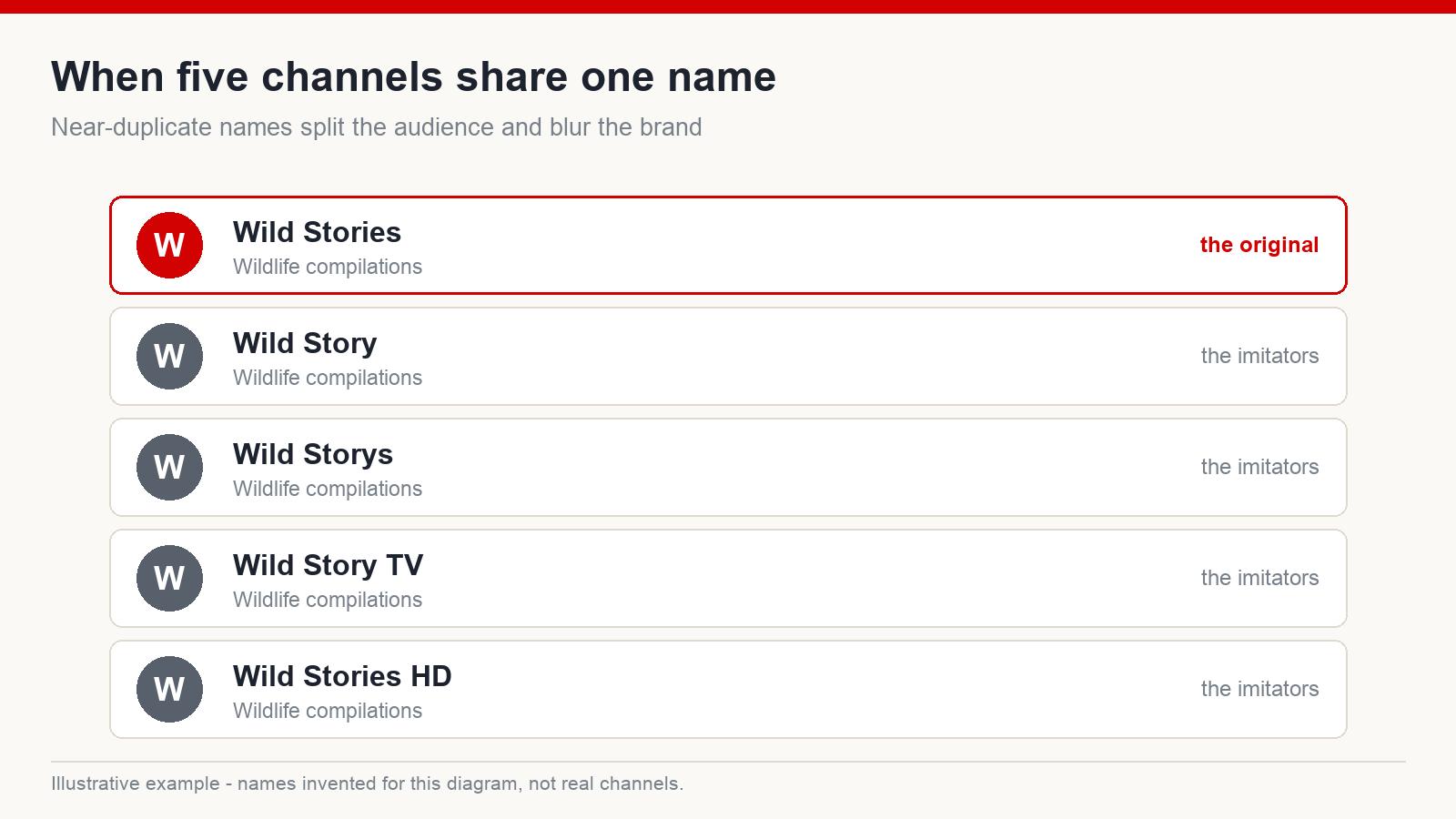
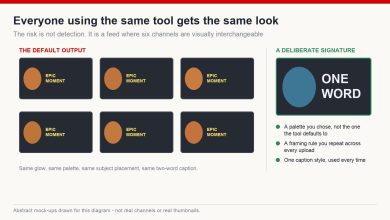
This is the mistake I see most often, and it always starts with good intentions. A creator finds a channel that is clearly working in their niche, likes the name, and changes one or two characters so it is not technically a copy.
You end up with a shelf that looks like this: Wild Stories, Wild Story, Wild Storys, Wild Story TV, Wild Stories HD.
Two things go wrong. Viewers cannot tell you apart from the channel you borrowed from, so some of the recognition you earn leaks to them. And you have handed yourself a permanent branding problem, because every time you get bigger you get more confusable, not less.
The working rule I use: if an established channel already owns a name in your niche and is actively publishing, pick a different direction entirely. Before you commit, search the name on YouTube and see what comes back. Two minutes of checking is cheaper than a rebrand.
The Two-to-Three Word Rule
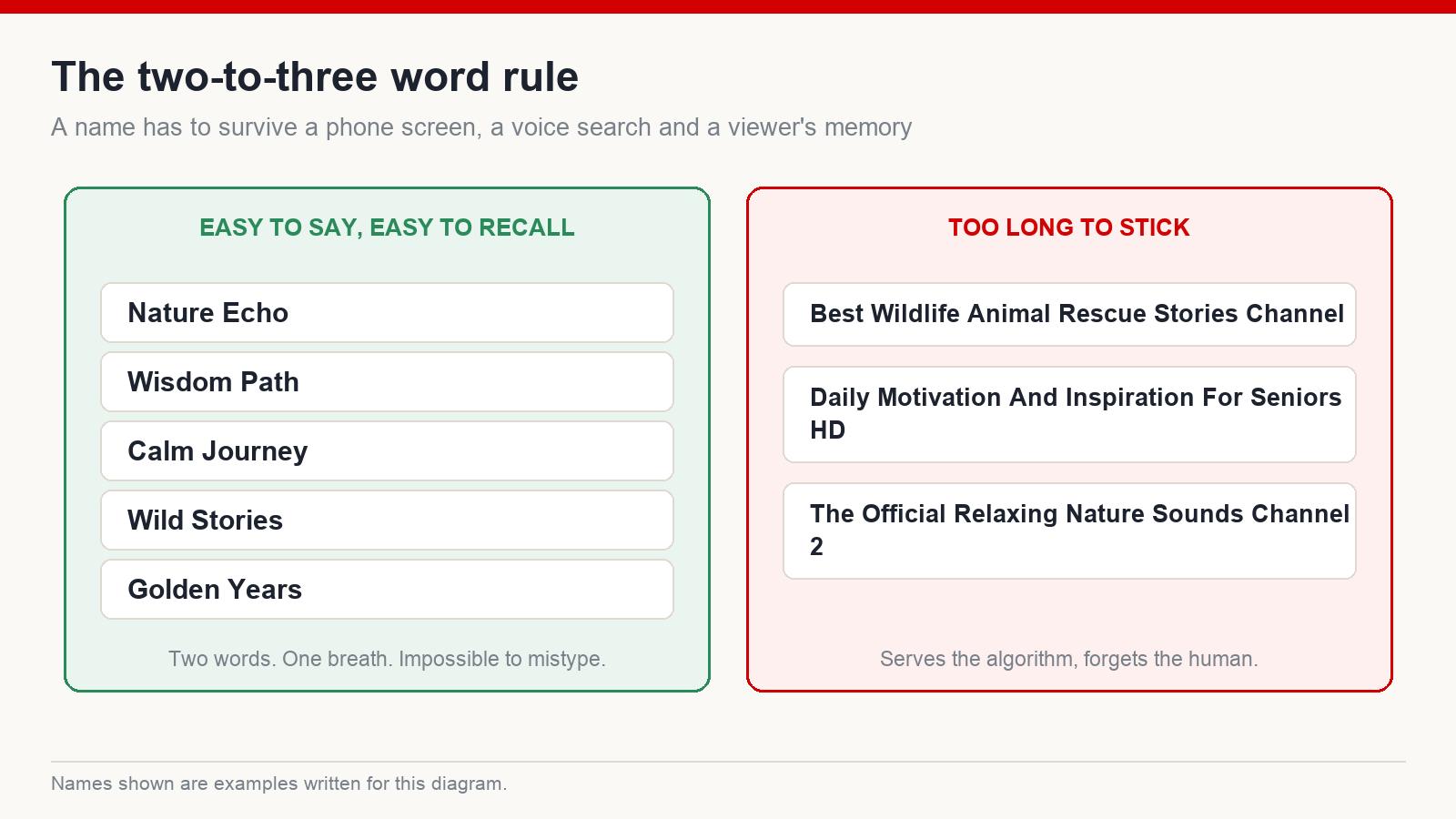
Look at the channels that have held a niche for years and you will notice how short their names are. Nature Echo. Wisdom Path. Calm Journey. Wild Stories. Two words, occasionally three.
There is nothing mystical about the number. Short names simply survive more environments. They fit under a thumbnail on a phone without truncating. They can be said out loud in one breath, which matters more than people expect now that a share of discovery happens through voice search and word of mouth. They are hard to mistype. And they leave room for the name to become a brand instead of a description.
Compare that with something like Best Wildlife Animal Rescue Stories Channel. Every word in it is defensible on its own. Together they produce a name nobody will ever repeat to a friend.
Three Ways to Build the Name
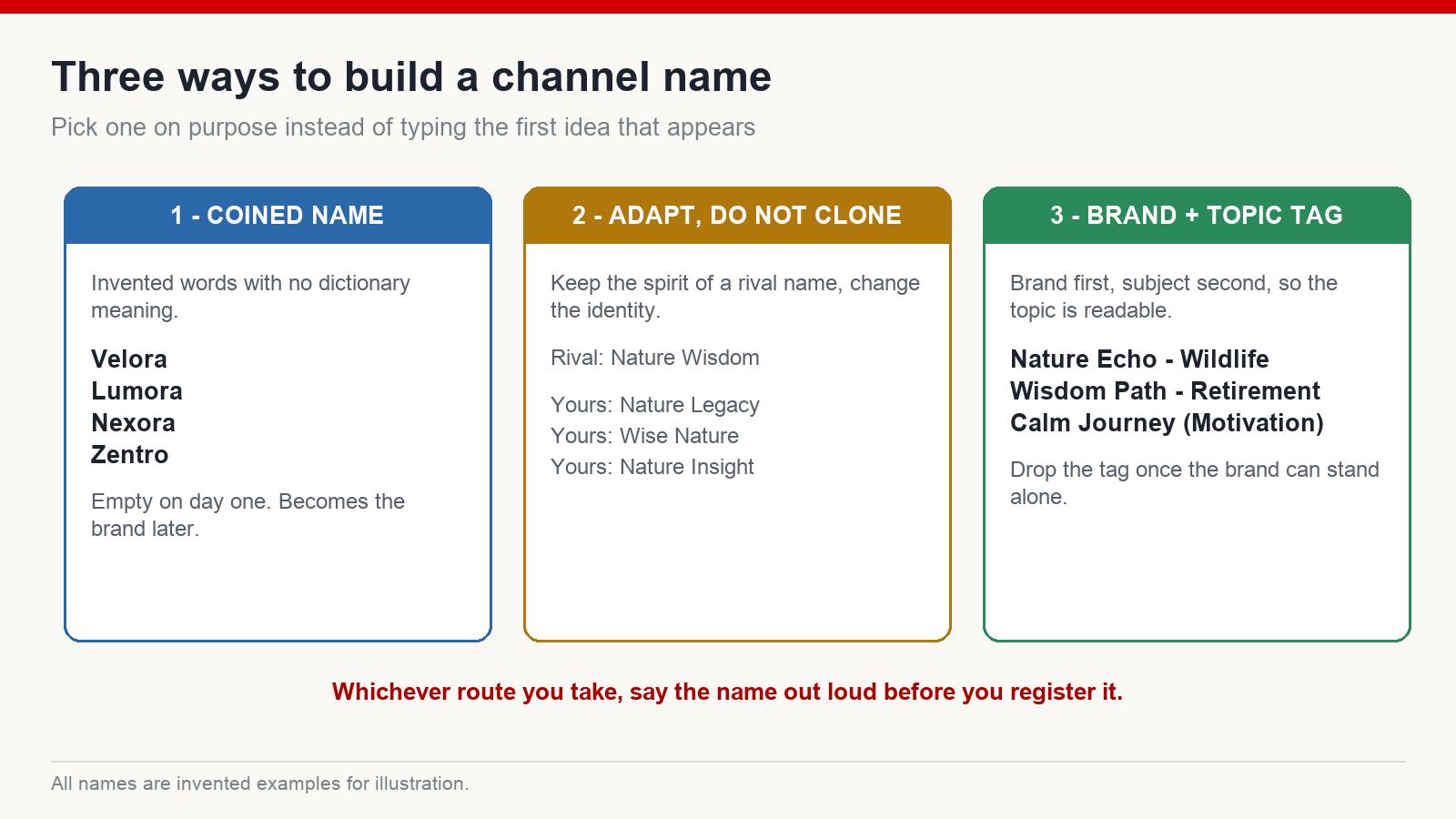
Rather than waiting for inspiration, pick a route on purpose. There are three that reliably produce usable candidates.
Route one: coin a word
The name does not have to mean anything. It has to be readable, sayable and unclaimed. Velora, Lumora, Nexora, Zentro — invented words with no dictionary baggage.
The trade-off is honest: on day one a coined name tells the viewer nothing about the channel. It is an empty container. What you get in exchange is a name nobody else can dilute, and a container that fills up with meaning as the library grows. If you intend to run the channel for years, that is usually the better trade.
Route two: adapt, do not clone
Study the names that already work in your niche, keep the feeling, and rebuild the identity. If a competitor is called Nature Wisdom, the useful move is not Nature Wisdom TV. It is Nature Legacy, or Wise Nature, or Nature Insight.
Same register, same promise to the viewer, different brand. You are borrowing the pattern, not the equity.
Route three: brand first, topic tag second
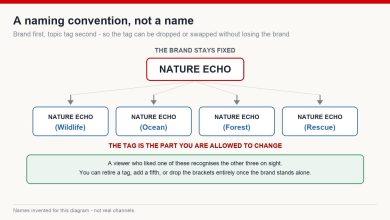
A structure many English-language creators use: a brand word, then the subject. Nature Echo – Wildlife. Wisdom Path – Retirement. Calm Journey (Motivation).
The tag does two jobs. A viewer scanning the feed understands what the channel is about before clicking anything, and the channel’s subject is stated plainly in a place that is visible everywhere your name appears. It works especially well in the first year, when nobody recognises the brand half yet.
One caveat worth stating: a topic tag helps positioning, it is not a ranking trick. Do not read it as a way to force your way into search results. When the brand can stand on its own, most creators drop the tag, and nothing bad happens.
Write It the Same Way Every Time
A small detail that is almost free to get right: decide how the name is capitalised and then never deviate.
If the channel is Nature Echo, it is Nature Echo in the channel banner, in the video description, on the website, in the email footer and in the community post. Not nature echo in some places and NATURE ECHO in others. Consistent casing is one of the cheapest signals of a real operation rather than a hobby account, and it costs nothing but discipline.
How Much Keyword Belongs in the Name
Some, usually. Not much.
Names like Senior Wisdom, Wildlife Stories or Nature Journey carry a subject word without sounding assembled by a machine. They read as names that happen to be descriptive.
The failure mode is the opposite: stacking every phrase you want to rank for into the name until it stops being a name. The channel name is read by people first and parsed by systems second. If it does not survive being said out loud, it is too long, whatever the keyword tool says.
Channel Name, Video Title and Tags Are Three Different Jobs
These get blurred together constantly, so it is worth separating them:
- Channel name — styled for brand recognition, kept identical everywhere.
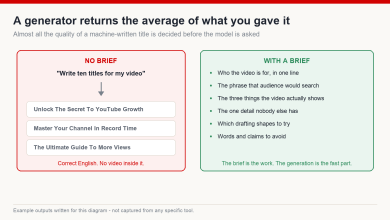
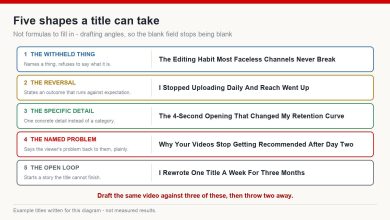
- Video title — written per video, free to change tone, free to be rewritten if a video underperforms.
- Tags — kept plain, lower case and consistent, so the subject of the channel stays legible across uploads.
Different jobs, different rules. Applying title logic to a channel name is how you end up with a nine-word channel.
Starting Points by Niche
Pick your niche before your name, because the name has to survive the content direction rather than the other way round. Once the niche is settled, these are the kinds of names that tend to hold up:
- Senior health — Senior Wisdom, Golden Years, Wise Aging
- Life philosophy — Life Insight, Wisdom Path, Mind Legacy
- Animals — Wild Stories, Nature Echo, Animal Moments
- Motivation — Rise Daily, Inspire Path, Better Mind
- Knowledge and facts — Fact Horizon, Knowledge Hub, Smart Vision
Treat these as patterns to reason from, not a list to take from. Every one of them is short, sayable, and specific enough to signal a subject without describing a single video.
What a Good Name Will Not Do
Worth saying plainly, because the internet tends to oversell this: a strong name does not get you views, subscribers or revenue. It does not rescue weak videos. Channels succeed on the content and on staying consistent long enough for a library to compound. Results vary, and YouTube’s discovery systems change on their own schedule.
What a good name does is remove friction. It makes you easier to remember, easier to search for on purpose, and easier to build on later. That is a real advantage, and it is a modest one.
So spend the extra hour before your first upload. A video can fail and you move on. A thumbnail can be swapped. A title can be rewritten next week. The name is the one decision you carry through everything else you build.
Does a channel name affect YouTube SEO?
It helps with topic positioning and brand recognition, and that is roughly where its influence ends. The content, and how well it holds an audience, matter far more.
Should I use a brand name or a keyword name?
A combination usually beats either extreme — a brand word that a viewer can remember, with enough subject language that a stranger understands what they are looking at.
Can I rename the channel after it grows?
You can, and sometimes it is the right call. Just avoid making a habit of it, because every rename costs you a slice of the recognition you have already earned.
How many words should a channel name be?
Two to three is the range that holds up best. It stays readable on a phone, easy to say, and hard to confuse with anyone else.
If you want to see how the naming decision fits into a whole faceless channel built for an English-speaking audience — niche, titles, packaging and the publishing rhythm around them — that is what I work through at mmoyoutube.com.